
Whether you are a student or a working professional, you have probably faced this assignment: research a topic, collect and evaluate information, distill the findings, and present them to a specific audience—all within a deadline.
Break that assignment down and it demands a long list of skills: framing the topic, finding information, evaluating sources, analyzing the subject from multiple angles, developing a point of view, shaping a narrative, designing the visuals, and preparing to speak. Every stage adds friction.
AI is now part of almost everyone's attempt to clear those hurdles. Research tools gather material; slide generators build decks. The problem appears solved—until you run the entire research-to-presentation process and discover the same old gap between inputs and outputs, analysis and communication.
01 Where Today's AI Research Tools Fall Short
You might begin with a conversational AI, ask it to search and compare sources, then copy each result into a document.
Many AI tools can already gather information and compare options, but several important shortcomings remain.
First, freshness and source transparency. Many tools depend on static knowledge from their training data, so their answers may be out of date. Even tools that claim to search the web often fail to provide a clear citation trail.
That makes it hard to tell whether a claim came from a peer-reviewed paper or an offhand blog post. The uncertainty creates its own cognitive burden: you have to spend additional time judging credibility.
Some AI tools now show sources, but the list may be sparse, opaque, or impossible to trace back to the original evidence.
Second, the analysis can be one-dimensional. Most tools respond linearly to the keywords you provide and rarely introduce new analytical lenses unless you explicitly ask. If your own perspective has blind spots, your prompt may never surface the deeper questions.
Third, the output arrives in the wrong shape. AI tools typically produce long-form prose, while a presentation needs structure, hierarchy, pacing, and a clear throughline. Turning research into a presentation still requires a manual rewrite—and that is often the most time-consuming step.
02 The Hidden Friction in AI Slide Tools
Once the research is ready, you may open a separate slide generator, paste in the material or upload the entire document, write another prompt, choose a template, and wait.
There are even more AI slide generators than chat tools, from dedicated platforms to specialized skills. But have they really made building a deck easier? You may still run into problems like these:
- The result looks good, but the service waits until you click Download to reveal the paywall. Paying is not necessarily the issue; the bait-and-switch is.
- Another tool offers free downloads, but the templates look dated—or the download is a PDF that cannot be edited.
- You install several slide-generation skills, yet the result still needs a complete structural rewrite. Or the deck looks good, but getting there requires constant switching among source pages, research notes, and slide editors.
More frustrating still, research logic and presentation logic are different. Research rewards breadth, depth, and completeness; presentations need a strong hook, conversational language, and visual momentum. Moving from one to the other often means reorganizing the entire argument.
That is the central problem with today's AI-assisted workflows. It is not a lack of tools. It is the accumulation of small roadblocks—and the loss of context—every time you move between tools, platforms, and modes of thinking.
The Tabbit Approach: A Continuous Research-to-Presentation Workflow
Tabbit is designed around this exact problem. Rather than treating search and slide generation as isolated features, it connects research and presentation in one workspace so context can flow naturally from one stage to the next.
01 Deep Research Skill
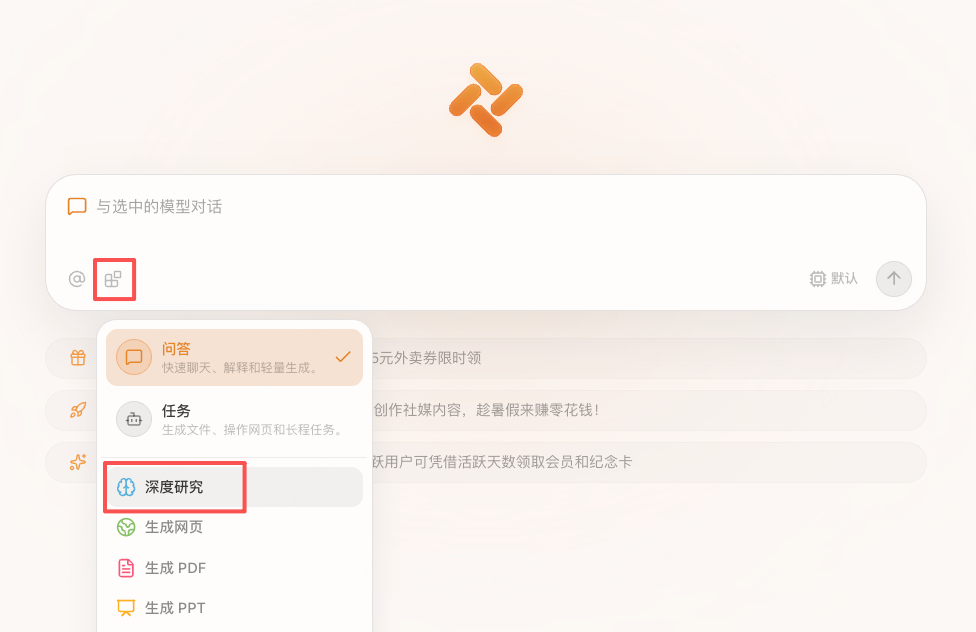
The Deep Research Skill tackles the hardest parts of finding and analyzing information. It can:
→ Bring presentation thinking into the research process from the moment you begin collecting material;
→ Search the live web for current information instead of relying only on static training data;
→ Attach a traceable source to each key point, reducing the time you spend validating credibility.
To compare several AI tools, I gave each one the same query: analyze Six Records of a Floating Life from a contemporary perspective.
One tool cited 11 sources. Another claimed to use references but would not reveal them. Tabbit's Deep Research Skill generated four dedicated deliverables: a complete editable text report, a clearly structured HTML report, and a JSON evidence library that records every cited source for later verification.
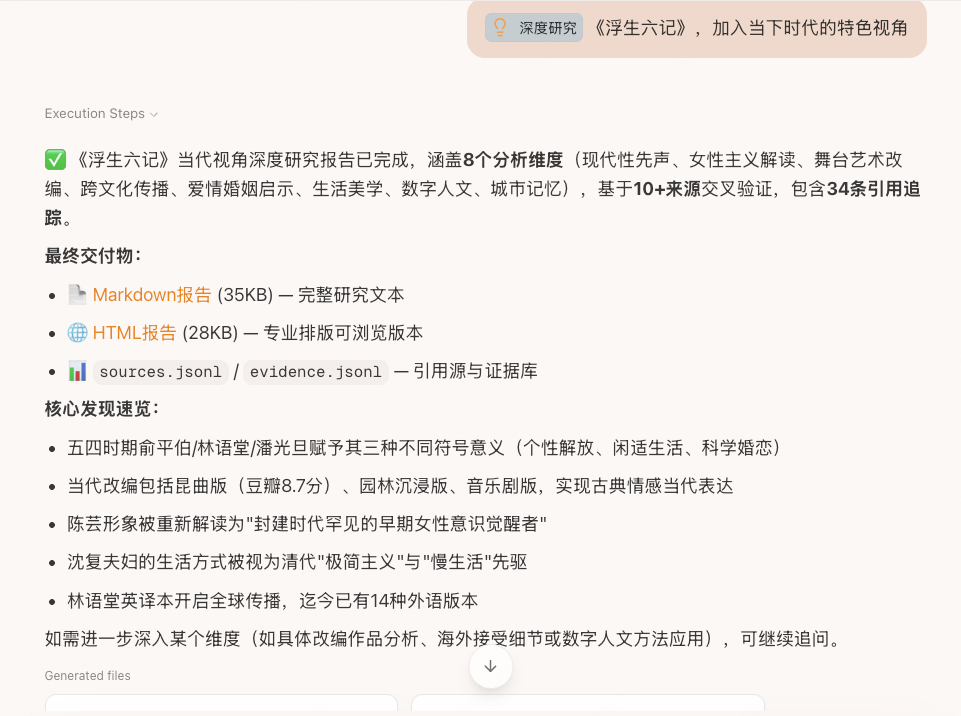
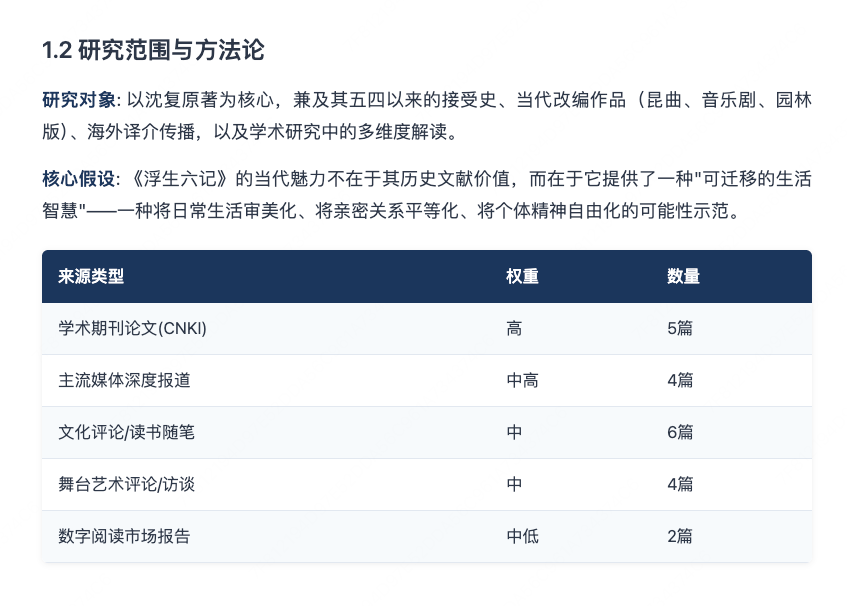
View the complete HTML report:
https://go.tabbit.site/projects/BUqHR4aFyg
→ Identify and expand a systematic set of analytical lenses, including angles you may not have considered yourself.
One competing tool proposed six angles: the relationship as a model of equal partnership; poetic living as a modern lifestyle philosophy; rethinking Shen Fu through the lens of failure; re-examining Chen Yun from a contemporary feminist perspective; interpreting the work as a form of meaning-centered healing; and asking why the book still matters today.
Another suggested three: finding poetry in the everyday as an answer to meaninglessness; recognizing early signs of women's awakening under rigid social norms; and translating a classic into contemporary art.
Tabbit's research outline was broader and more structured:
Executive summary; 1. Why read Six Records of a Floating Life today? 2. Early signs of modernity and the transformation of Chinese literature; 3. Chen Yun through a feminist lens, from the ideal wife to a prototype of the modern woman; 4. Contemporary artistic reinvention, from Kunqu opera to musical theater; 5. The book's global journey, from Lin Yutang to 14 languages; 6. Modern lessons about love and marriage; 7. Everyday aesthetics and minimalist living; 8. Digital humanities, computational literature, and AI interpretation; 9. Urban memory and Suzhou as a literary landscape; 10. Integrated insights; 11. Limitations and caveats; 12. Recommendations; 13. References.
The process surfaced eight substantive lenses—including modernity, feminism, cross-cultural circulation, multimedia adaptation, and digital humanities. These were not pulled from a fixed template; they emerged dynamically from the evidence found during the search. Give Tabbit a different topic or body of material, and it can build a new framework around that subject.
The comparison makes the difference clear. A conventional AI response primarily interprets the text itself. Tabbit's Deep Research Skill tries to map the full range of productive directions a topic can take today.
The goal is not to replace human judgment with a longer AI essay. It is to widen your field of view, uncover material beyond your blind spots, and help organize your thinking.
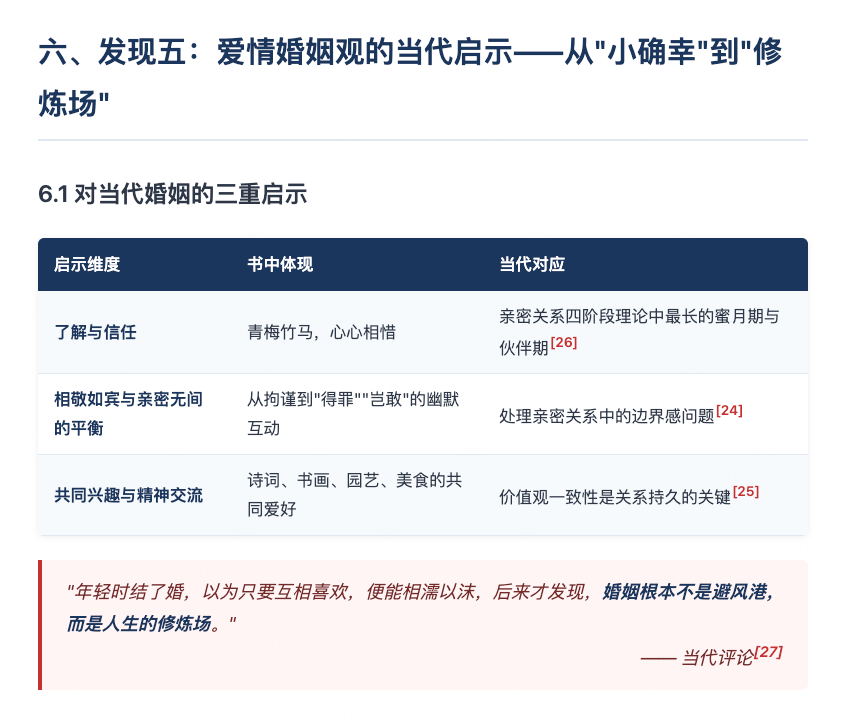
You still decide which lens to pursue, how to support the argument, and what conclusion to draw. The tool expands your perspective and provides cross-disciplinary inspiration; it does not outsource the thinking.
02 Generate Slides in the Same Conversation
Once the research and ideas feel mature, simply ask for a presentation. When Tabbit detects that you want slides, it suggests the PPT Skill automatically.
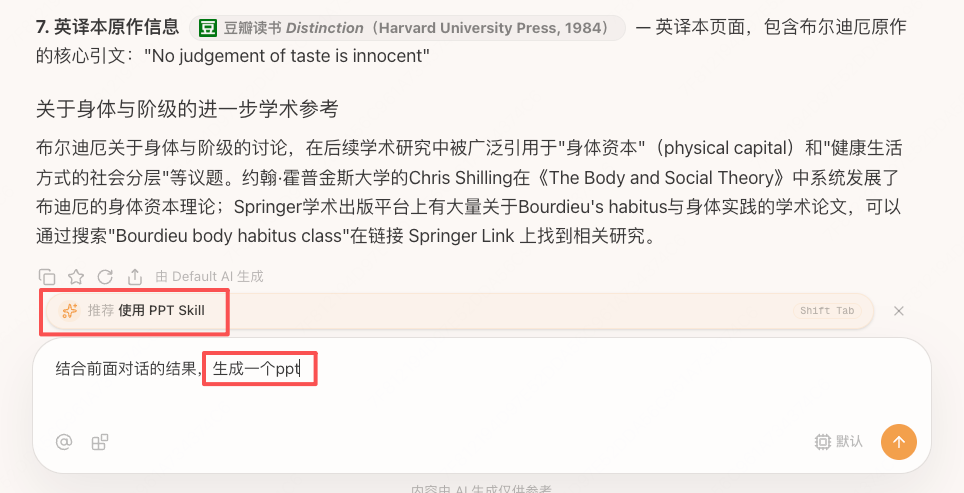
This closes the gap between research and presentation.
→ Because the conversation shares the same memory, the deck inherits the reasoning and findings from your research instead of starting from scratch.
→ The analytical dimensions discovered during research—and anything added later in the conversation—flow naturally into the deck's section structure. There is no copy, paste, and rebuild step.
→ The generated deck is free to download and fully editable. Every element can be changed, and Tabbit can generate speaker notes alongside it.
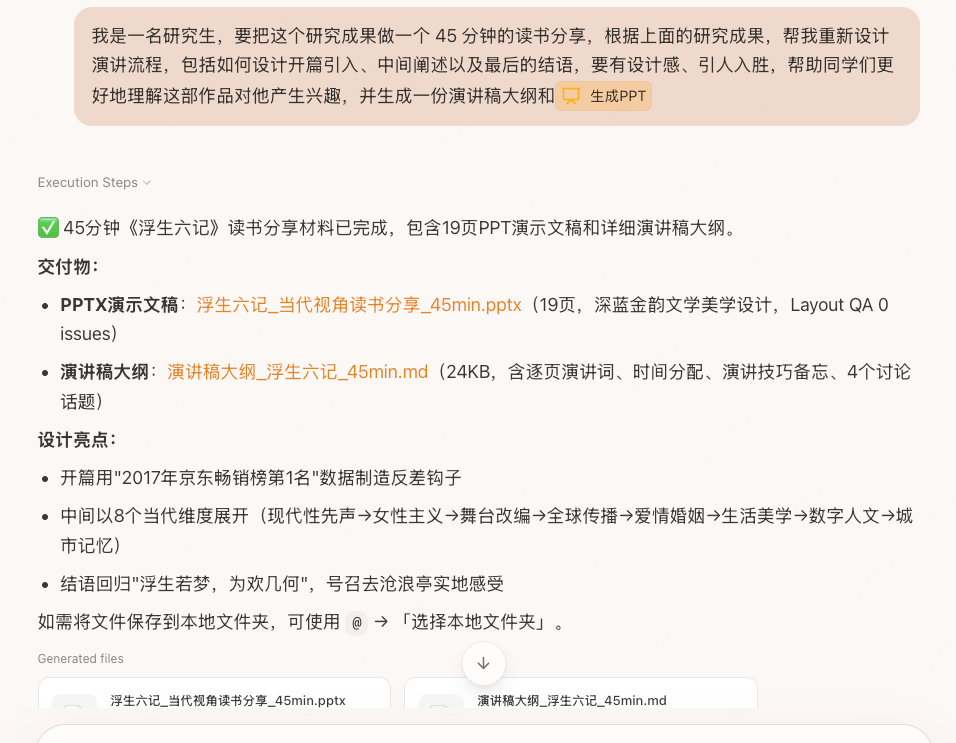
→ If the first version is not right, provide a reference image and ask Tabbit to redesign the entire template in that style—from the color palette and layout to the decorative details. The redesign happens in the same continuous conversation, with no separate design tool and no platform hopping.
Here is an unedited example generated directly by Tabbit. Every element in the deck remains editable and replaceable.
→ Tabbit also supports PPT skills created elsewhere. If you already have a slide-design skill you like, upload it to Tabbit and turn it into your own upgraded PPT Skill.
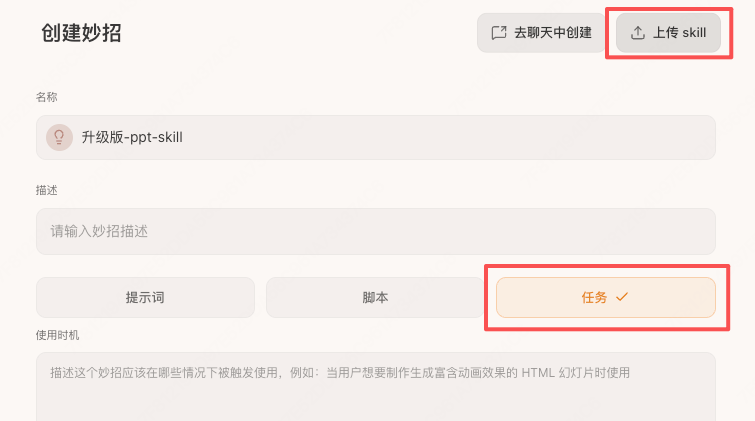
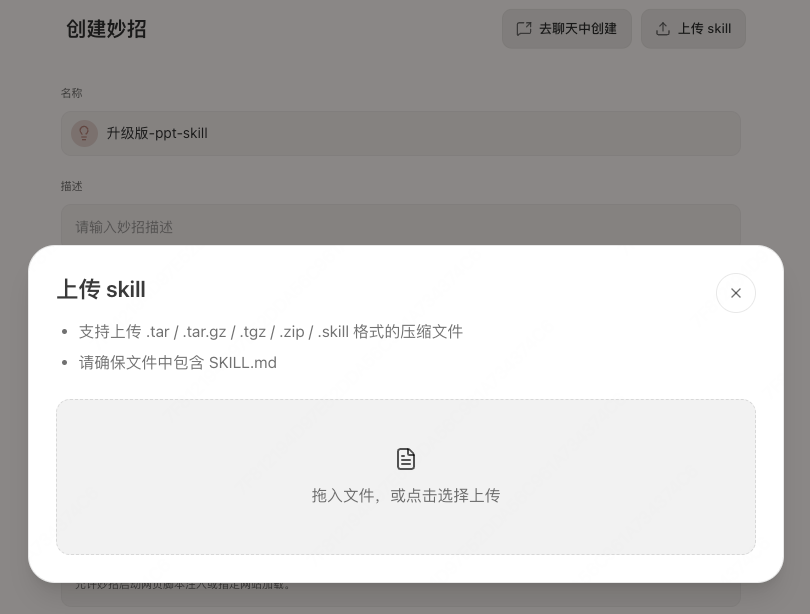
Return to the same workflow, choose your new Skill, and generate the deck in the style you prefer:
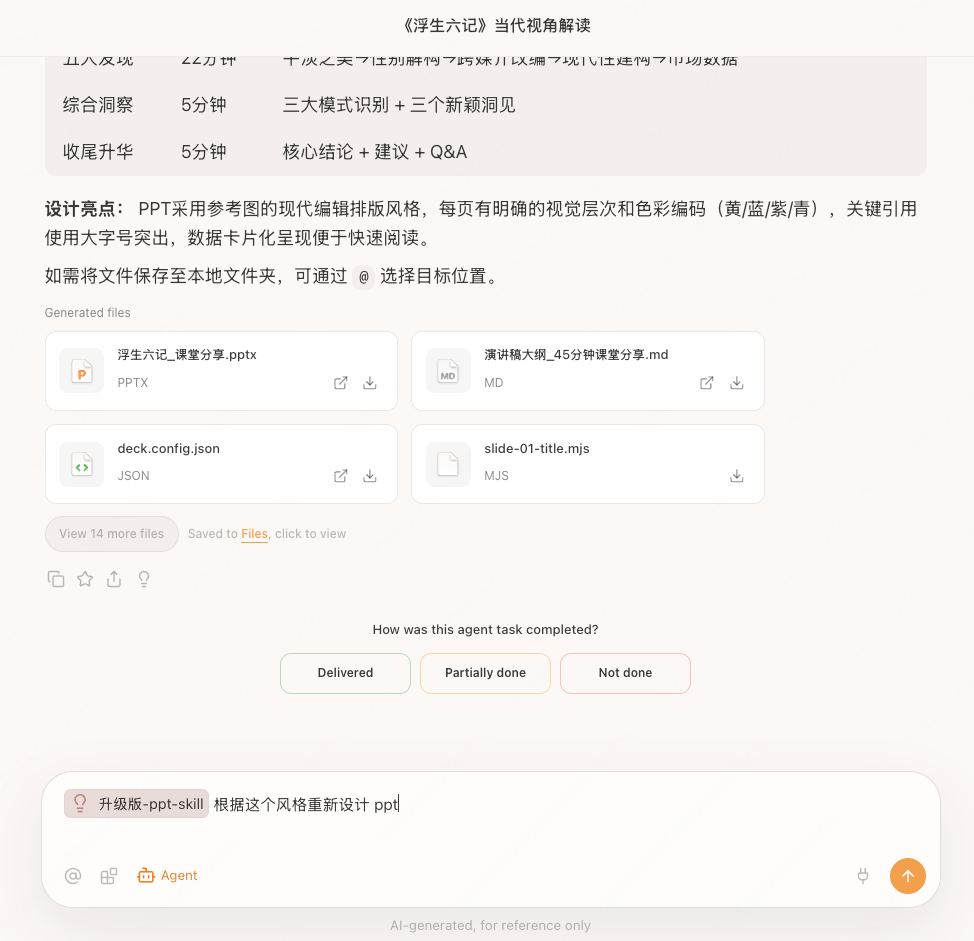
You get the speed and structure of an AI-generated first draft without giving up control of the final presentation. There is no last-second download paywall, either: both Skills are available with Tabbit's standard plan.
Where This Workflow Fits
This workflow applies anywhere the work is information-dense, needs a clear structure, and must ultimately be presented to other people.
Academic and Educational Work
Literature reviews and thesis proposals are natural use cases. Graduate students need to map a field's current research, identify major directions, find key scholars and representative papers, and preserve a traceable citation trail. The resulting deck and speaker notes can then serve as a foundation for a proposal defense.
The workflow also fits interdisciplinary seminars. When students enter an unfamiliar field, Deep Research can establish a knowledge framework quickly so they spend less time piecing together basic concepts.
Business and Professional Work
Industry research and competitive analysis are among the most common scenarios. Consultants and product managers entering a new market need to analyze it from multiple angles and brief decision-makers quickly.
A single Deep Research run can cover market size, the competitive landscape, technology trends, and policy conditions, produce a sourced report, and convert it directly into an executive-ready deck.
The same approach works for investment due diligence, policy and compliance analysis, strategic planning, and annual reviews—anywhere you need a detailed evidence base before building the narrative.
Public Affairs and Media
Policy briefs must compare practices across markets and withstand scrutiny at every data point. Investigative reporters often need to become near-experts in a field on a tight deadline. In both cases, live search and a traceable evidence chain are essential.
Speaking and Independent Publishing
Preparing a talk requires topic validation, research, storytelling, and visual communication. Deep Research can test whether a subject offers enough public value and fresh insight, while speaker notes help shape an emotional arc and a clear progression of ideas within a limited time.
For course creators, Deep Research can organize a knowledge system efficiently, with the outline and slides serving as the first draft of the curriculum and teaching materials.
Have another use case in mind? We would love to hear how you put the workflow to work.
Ready to try it? Visit www.tabbit.ai to download Tabbit for free.