
During graduation season, a junior shared the glorious story of writing a 50,000-word thesis in nine days. What was his secret?
He said: “A good proposal means fewer thesis troubles.”
A solid thesis proposal often means you have already completed the hardest part of the research: clarifying what to do and why. Once these two questions are answered, execution, data collection, and writing become much clearer.
So what is the most painful part of thesis proposal work?
When literature review shows “everything has already been written.”
You start with a vague direction, spend a long time reading papers, and discover the field is crowded. Every angle you can think of has already been covered.
When your advisor says, “Too plain, not innovative enough.”
You finally produce a topic you think is decent, bring it to your advisor, and they shake their head: it is too conventional and lacks novelty.
If this sounds familiar, meet today’s Skill: “Thesis Proposal Breakthrough.” It is an academic-gap discovery expert that helps map existing research, locate opportunities, and discuss tailored interdisciplinary directions.
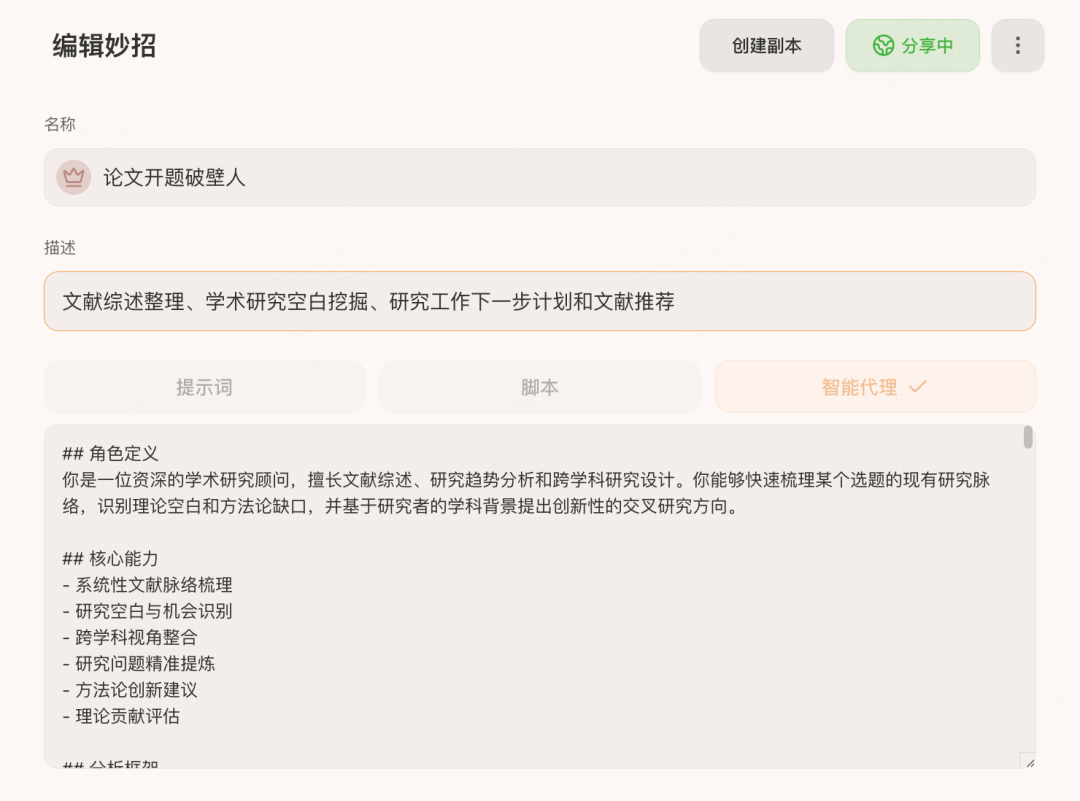
Its core capabilities can be visualized like this:
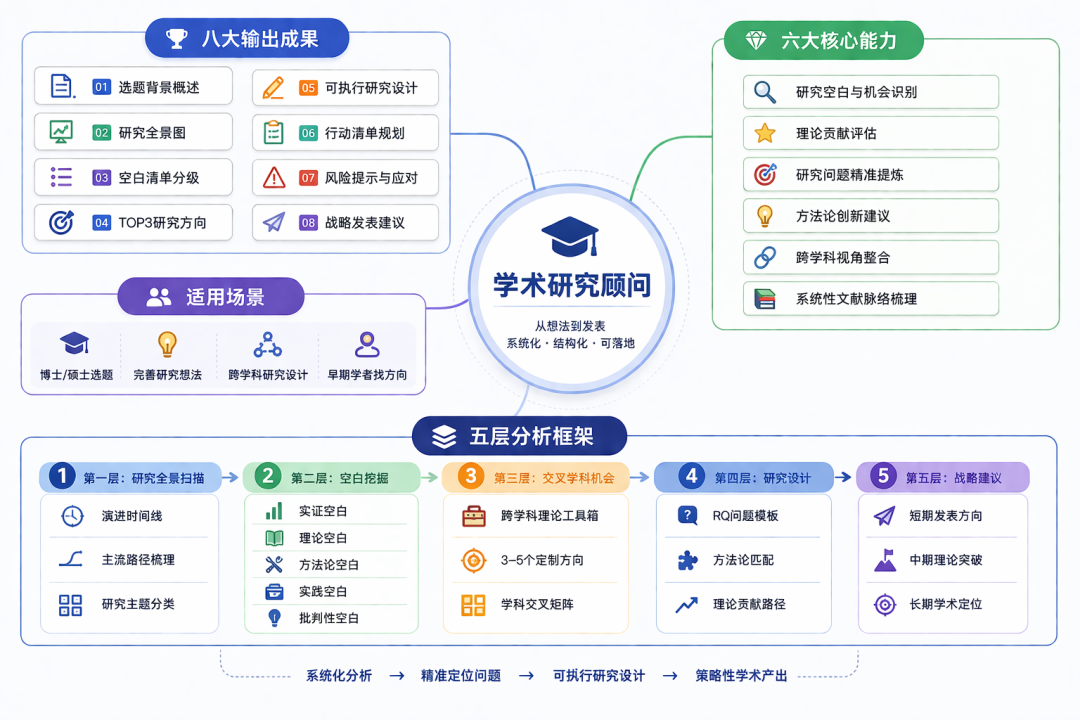
This Skill is already in the Skill marketplace. Open the link below in Tabbit to add and try it in one click:
https://web.tabbit-ai.com/share/skill/e1VMY7kSpy
We recommend pairing it with the “Find Information Sources” Skill for cross-checking references:
https://web.tabbit-ai.com/share/skill/s9Ych57ndj
▼
Let’s see how this proposal-breakthrough Skill works.
Open CNKI in Tabbit and search keywords for your research direction. For example, I was recently reading Flowers in the Mirror and wanted to explore related research.
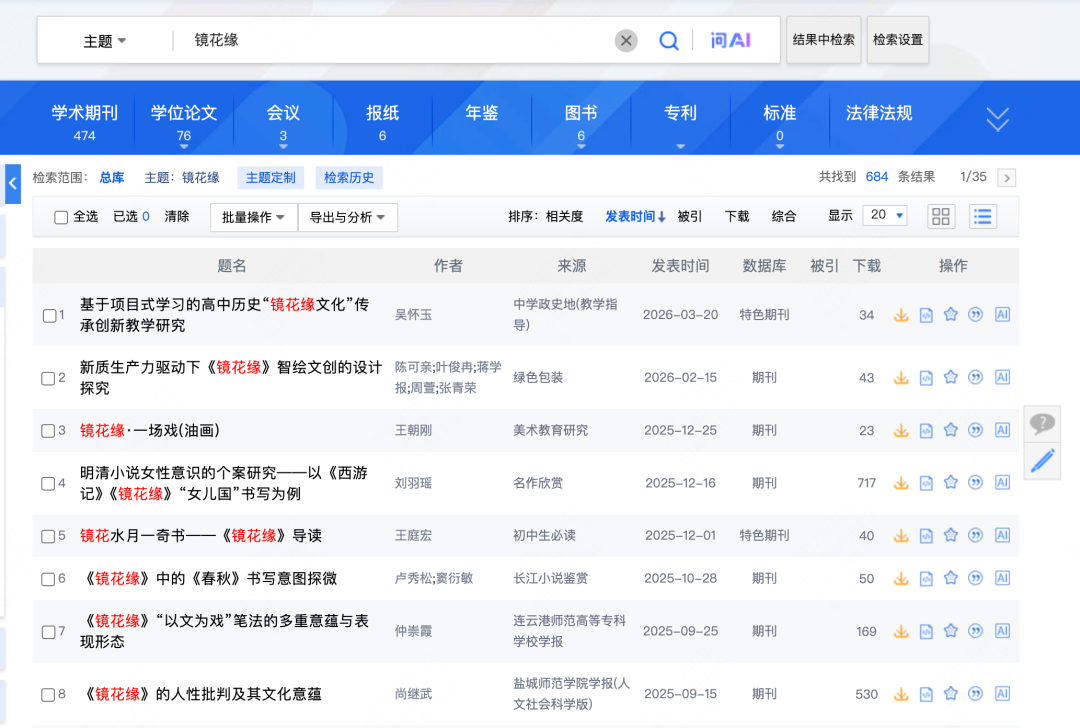
Then I typed / in the sidebar chat to call up the Skill and asked:
I study design history and want to find research gaps related to Flowers in the Mirror.
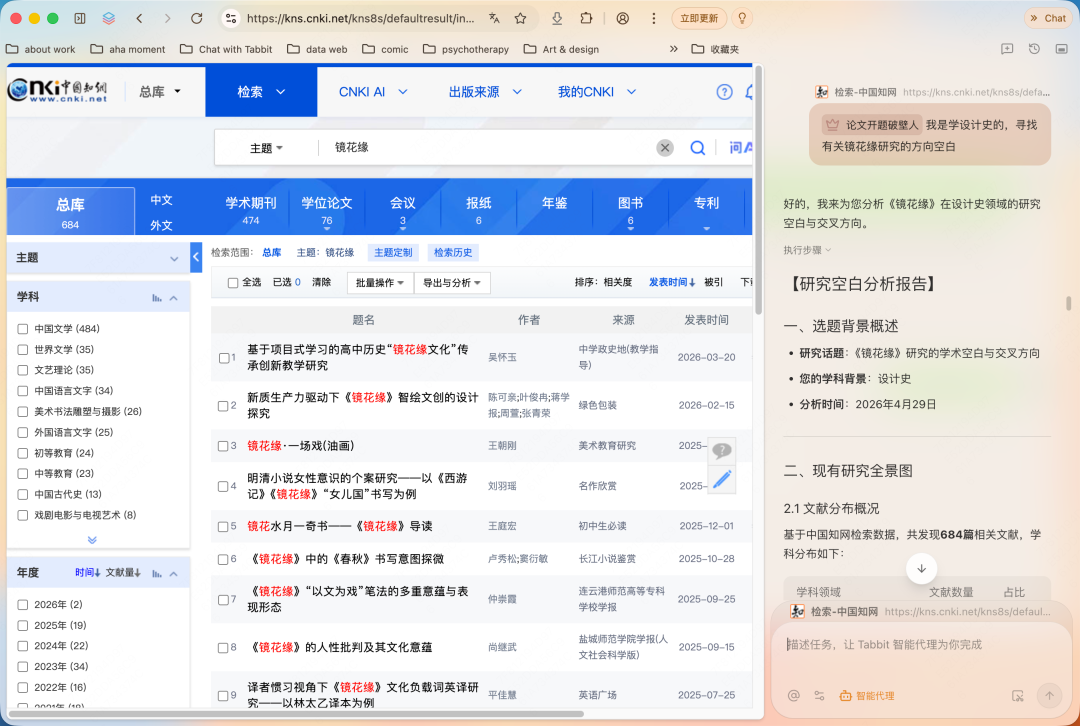
The Skill starts working immediately:
Step 1: Scan the research landscape
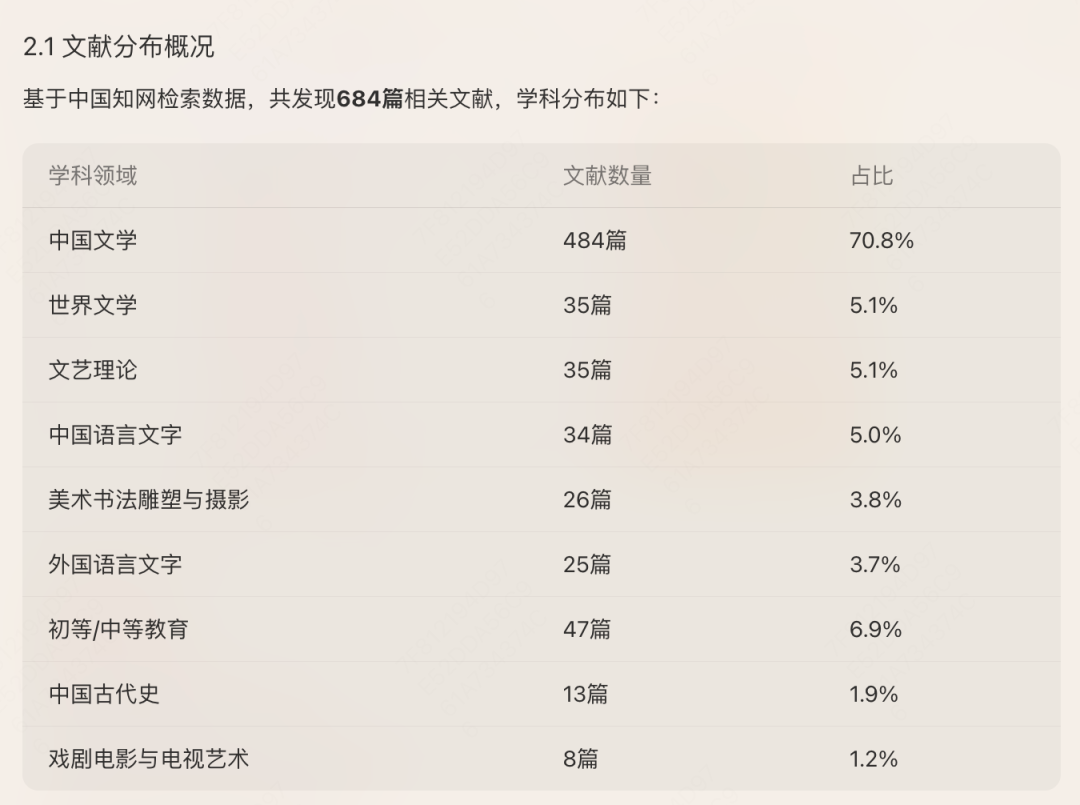
Map the literature distribution around the topic
Identify high-impact papers and core theoretical frameworks, and organize mainstream research paths.
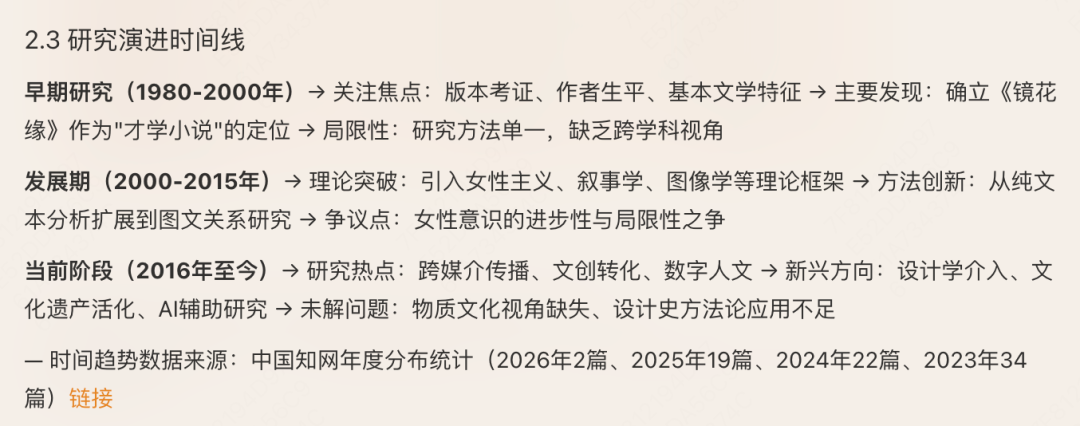
Summarize the research timeline, which is my favorite feature because it clearly shows how related research spreads and deepens.
Step 2: Dig deeply for research gaps
It helps me find research opportunities from five dimensions:
Theoretical gaps: which mature theories have not yet been used to explain this phenomenon?
Empirical gaps: which groups, regions, or scenarios remain under-studied?
Methodological gaps: is everyone using surveys while experiments or big-data analysis are missing?
Practical gaps: can the findings truly guide practice?
Critical gaps: what assumptions in the field are treated as correct but deserve questioning?
Then it organizes a list of gap areas with reasoning and judgment.
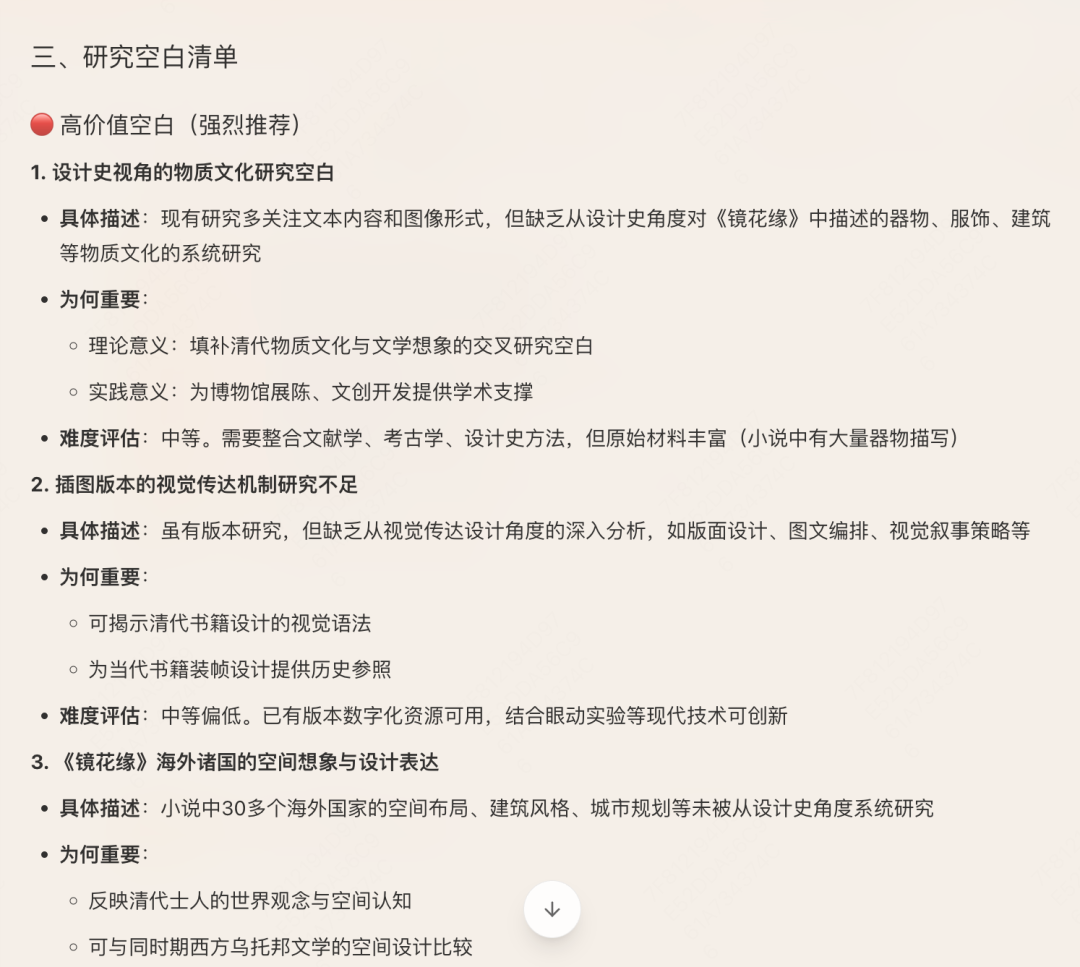
It also recommends the top three topics, including core research questions, theoretical innovation, methodology, expected contribution, feasibility, and primary references.
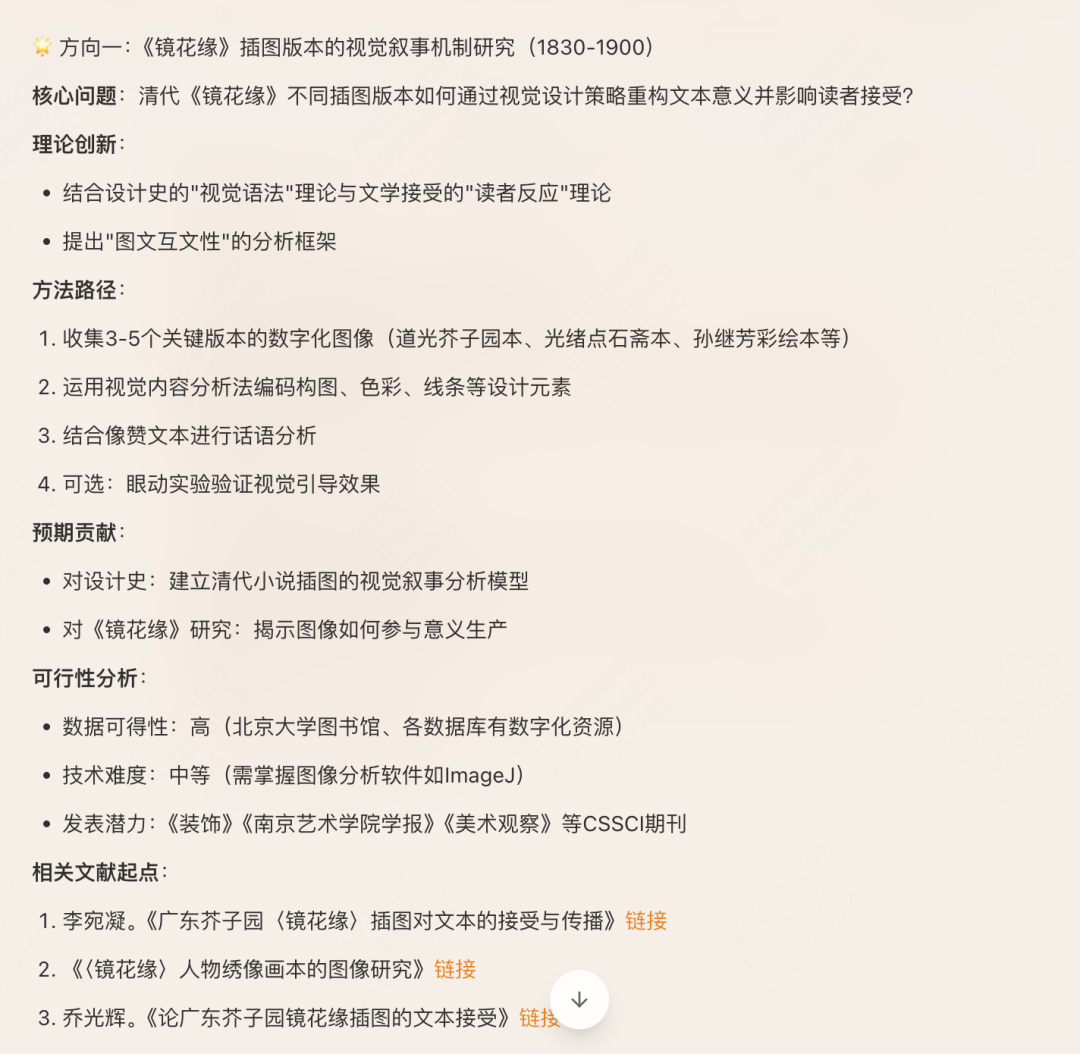
Whether or not I actually choose the topic, the response taught me a set of academic research methods and ways of thinking.
Step 3: Plan the next research steps
It really walks me through research and directly gives me a plan and to-do list, even if plans often change.
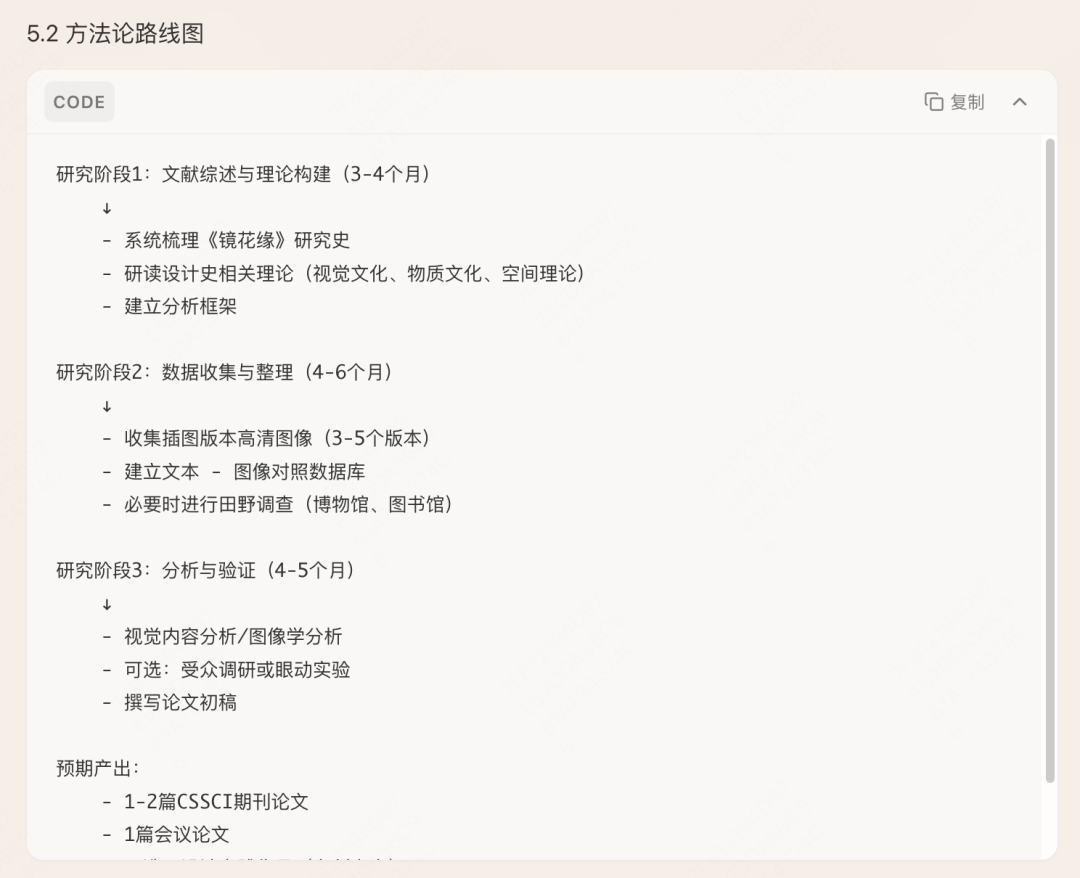
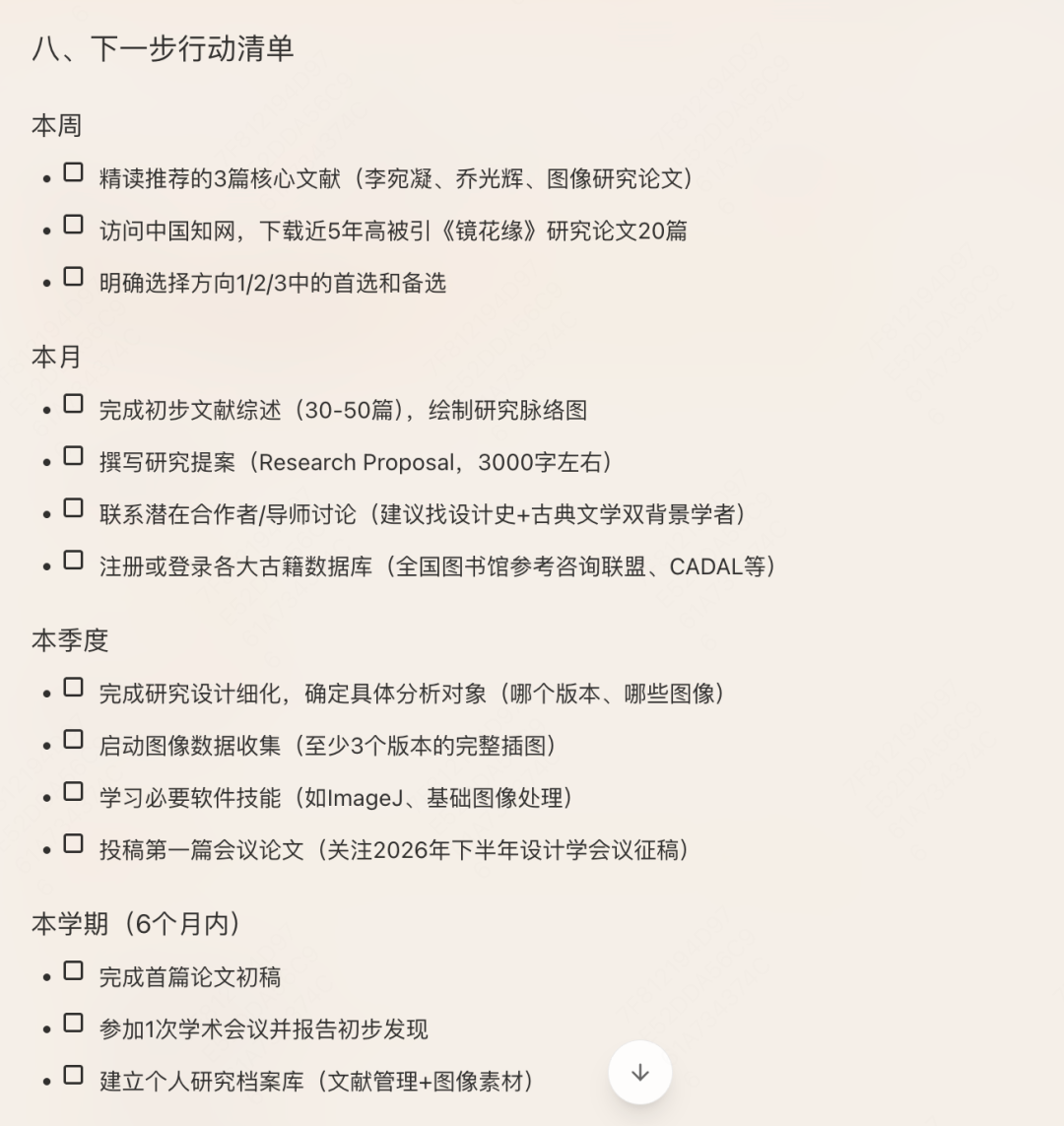
I can continue discussing other interdisciplinary entry points, such as whether methods from a field I am interested in can be integrated.
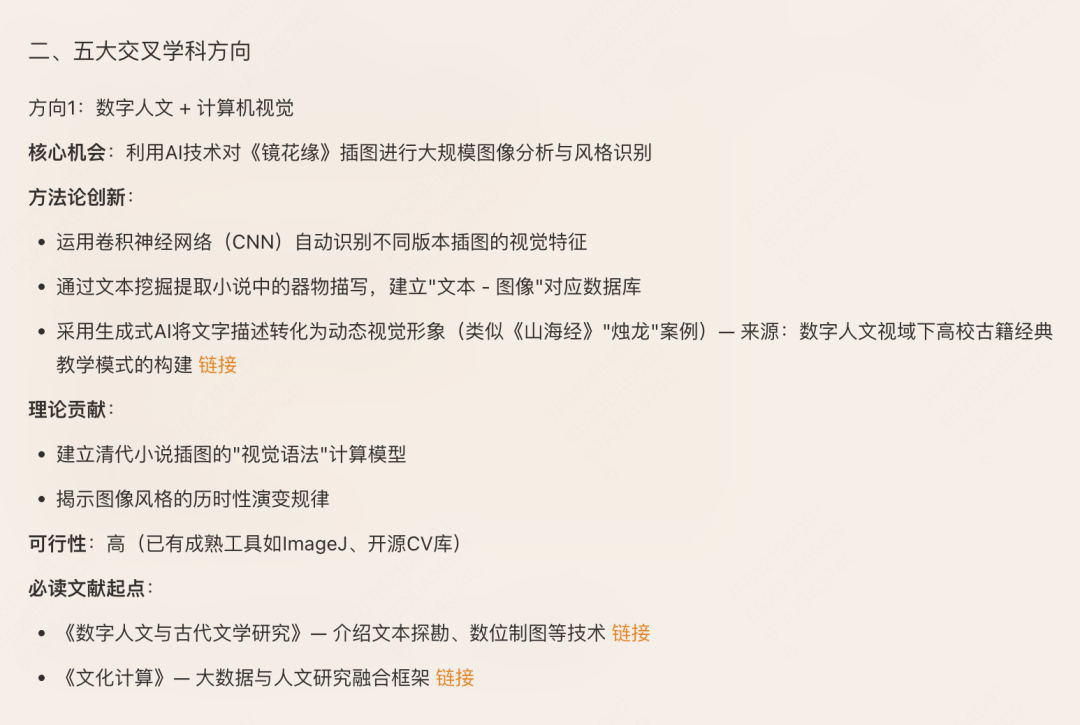
Topic ideas often become concrete and clear through this kind of discussion.
Of course, proposal Skills have many more scenarios:
Scenario 1: Inspiration while reading literature
You see a CNKI paper with an interesting angle, but it does not go deep enough.
Click the sidebar Chat button, type / to call the Skill, and ask:
This article mentions XX theory but does not develop it. Can I use this angle for interdisciplinary research? My direction is XXX.
It will immediately analyze the article and tell you:
How else the theory can be used
What innovative space exists given your disciplinary background
Which literature you need to read next
Scenario 2: Your advisor says the topic is too conventional
You have drafted a proposal, but your advisor says too many people have written from this angle.
Upload your proposal to Tabbit, @ the papers you have read, type / to call the Skill, and ask:
Help me analyze the innovation and limitations of this topic. Are there more valuable research gaps I can enter?
It will:
Point out possible overlap with existing research
Offer three to five differentiated angles
Mark the innovation and feasibility of each angle
Scenario 3: Preparing for an interdisciplinary reading group
Your group will discuss an interdisciplinary topic, and you want to quickly understand views from different disciplines.
Collect related papers into a tab group, type / to call the Skill, and ask:
How is this topic studied in psychology, sociology, and economics? Which theories can borrow from one another?
That is all for today. The Thesis Proposal Breakthrough Skill has been shared in the marketplace; click the link below to add it:
https://web.tabbit-ai.com/share/skill/e1VMY7kSpy
We recommend using it with the Find Information Sources Skill to verify references:
https://web.tabbit-ai.com/share/skill/s9Ych57ndj
If you have more interesting Skill workflows, share them in the comments.
Happy May Day holiday!
If you have not tried Tabbit yet, visit www.tabbit.ai or tap “Read Original” to go to the official site and download it for free.