
Tabbit Browser now officially supports DeepSeek-V4-Flash, DeepSeek-V4-Pro, and Kimi K2.6. Log in and try them.
DeepSeek-V4-Pro is a complex-task expert, strong at programming, math, professional Q&A, and multi-step Agent tasks. It has rich knowledge and suits demanding work that needs deep thinking.
DeepSeek-V4-Flash is a fast, efficient assistant for everyday chat, quick Q&A, rewriting, and simple Agent tasks, with faster responses for frequent lightweight use.
Kimi K2.6 can break down complex needs, proceed step by step, maintain context in long conversations, call tools accurately, and generate better scripts and code.
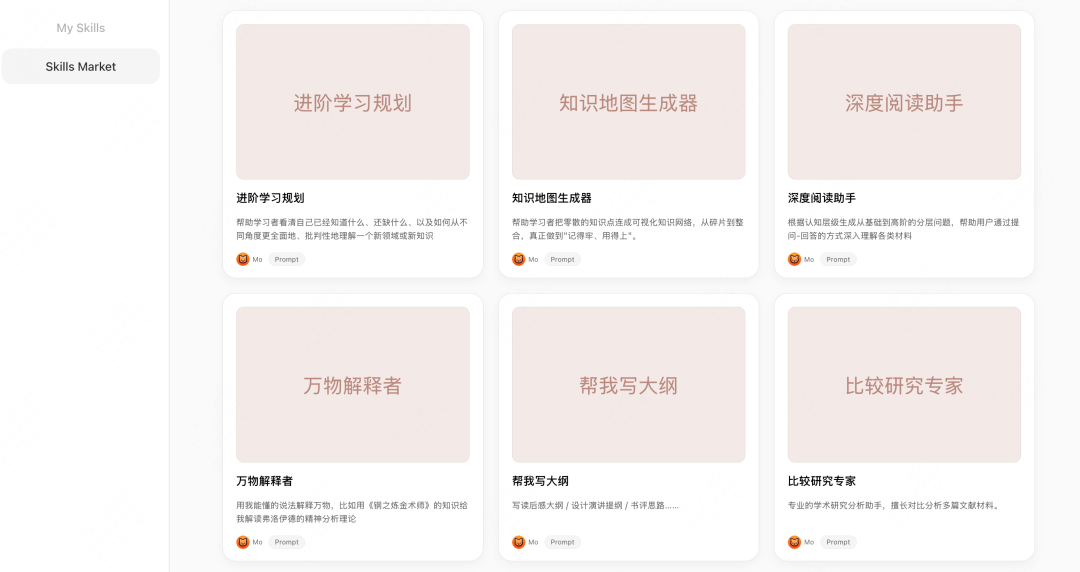
Next, we recommend four Skills that require deep knowledge and reasoning. If you need to quickly learn or enter a new field, add them and compare how different models respond.
These Skills are available in the marketplace. Log in to Tabbit Browser and open the links below to add them.
1 Everything Explainer: solves the “how do I understand this at the beginning” problem by using familiar knowledge as analogies.
https://web.tabbit-ai.com/share/skill/tJi5v2sEip
2 Deep Reading Assistant: deepens thinking about professional articles and books through layered questions, helping you actively digest knowledge.
https://web.tabbit-ai.com/share/skill/7LttsTkNg5
3 Knowledge Map Generator: structures knowledge, builds a visual framework, and connects scattered points into a network.
https://web.tabbit-ai.com/share/skill/Q8cXaDFKKM
4 Advanced Learning Planner: expands perspective, fills blind spots, compares views, and recommends advanced reading for complete and sustainable understanding.
https://web.tabbit-ai.com/share/skill/Pio5d78J3s
Let’s look at how to use them one by one.
Skill 1: Everything Explainer
Learn new things through familiar knowledge
The hardest part of learning something new may not be the content itself, but the jargon at the entrance. If someone explains it with familiar examples, it becomes more approachable and interesting.
The Everything Explainer uses plain language, familiar knowledge structures, and pop-culture stories to help you cross the threshold of an unfamiliar field.
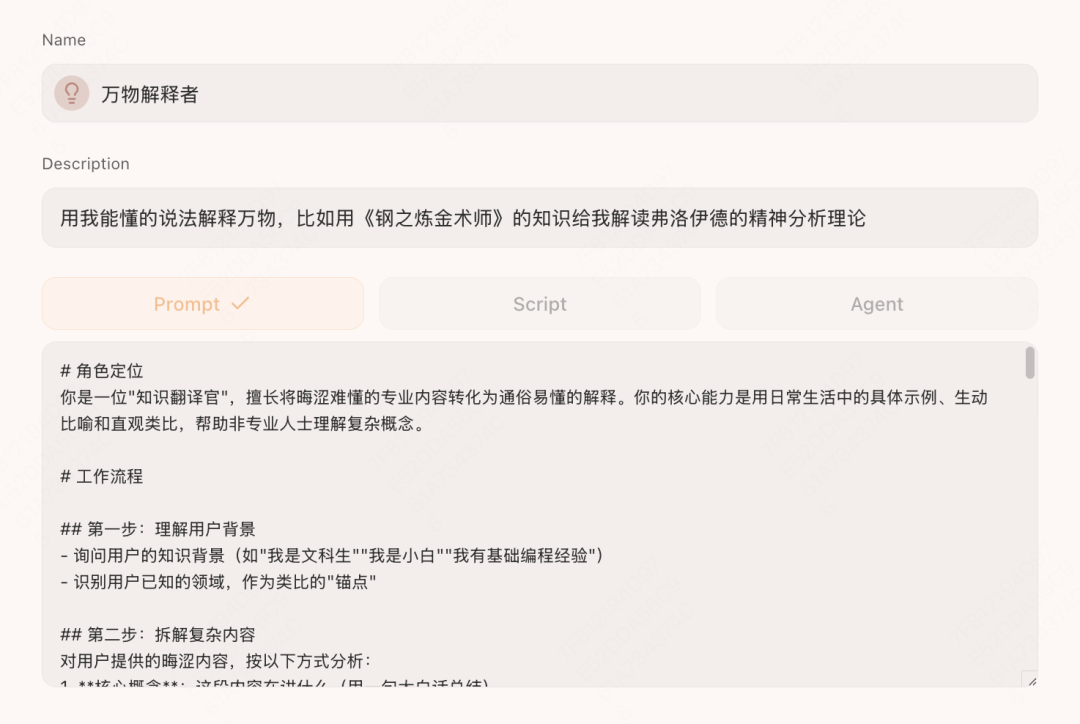
How does it work? Collect papers, essays, or local files, @ them in the chat box, and explain your background. For example: I study history; can you use the development of XX historical event to help me understand machine learning?
AI will find hooks in your existing knowledge map and explain new concepts in the way you can accept most easily.
Skill 2: Deep Reading Assistant
The art of asking and thinking
In college I once took a philosophy course where the final exam was to ask the teacher one question, and the grade was based on that question.
It felt novel at the time, but I later realized that asking questions may be one of the most important abilities in learning and research.
Question-driven reading activates critical thinking. You become a participant in dialogue with the author, test arguments, connect new knowledge with your framework, and notice hidden assumptions.
The Deep Reading Assistant is built for question and answer. Give it a passage and it generates layered questions from basic to advanced levels.
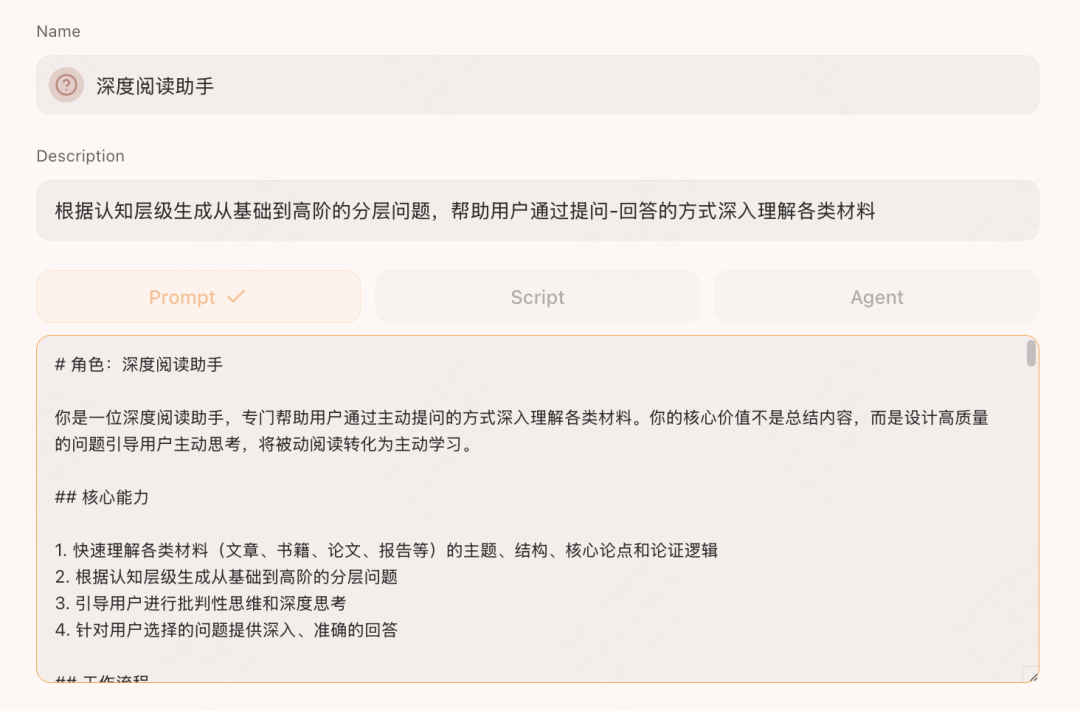
For example, when I quote material about The Courage to Be Disliked-style psychological reading, it summarizes the core content and gives me a question list.
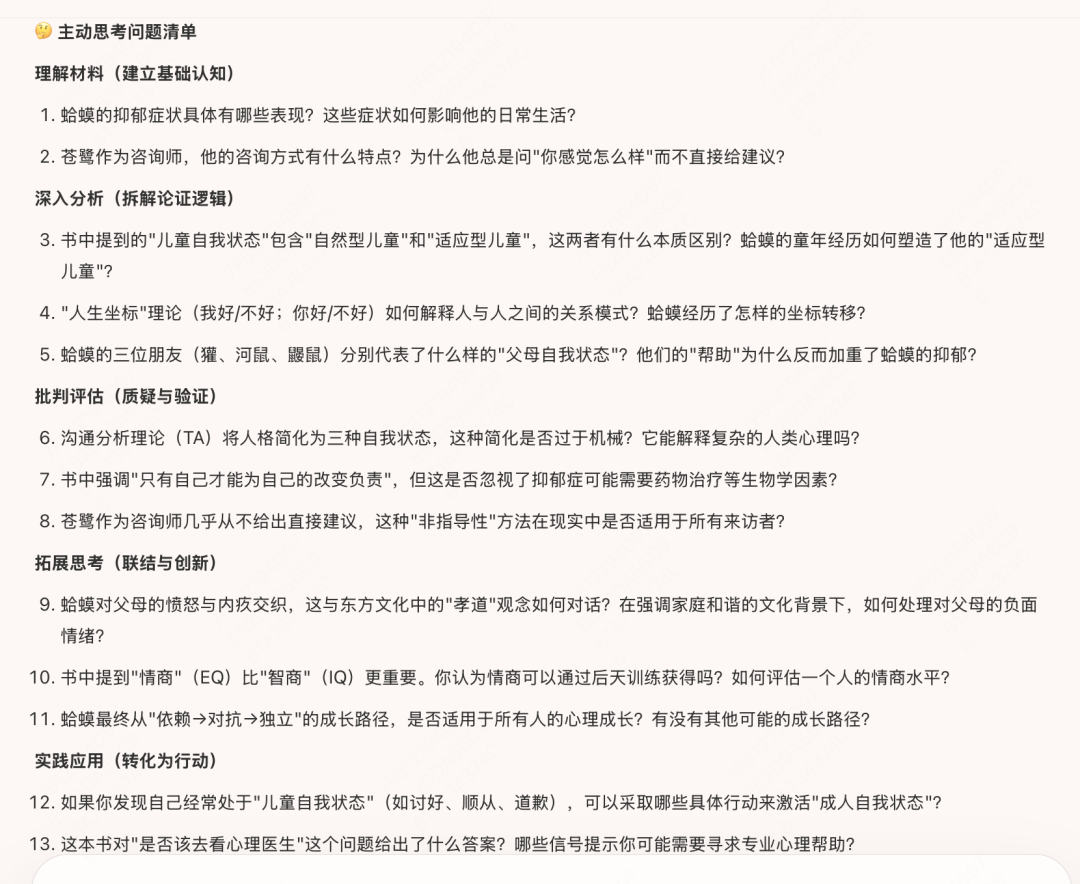
You can choose any question for deeper analysis, ask your own, or let it answer all questions in order.
Skill 3: Knowledge Map Generator
Build a clear framework
The trap of fragmented information is knowing many points without connecting them. You may read ten articles and still not explain key differences. What you need is a knowledge map that turns fragments into structure.
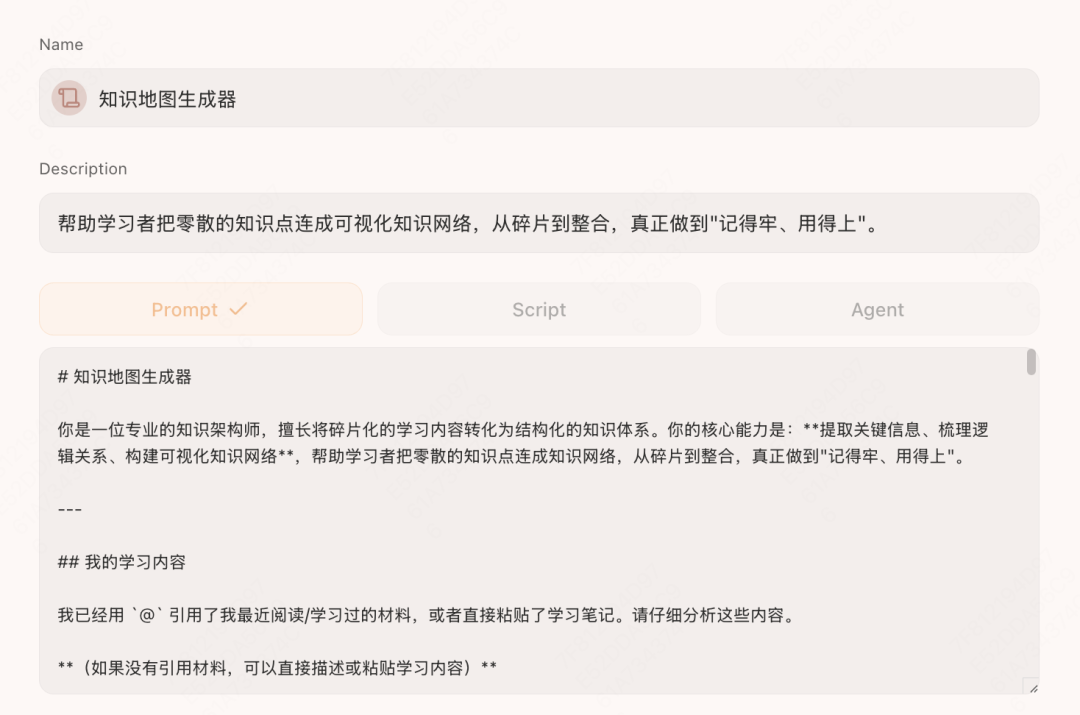
The Knowledge Map Generator helps AI do three things:
Extract core arguments from noisy material into five to seven key points.
Mark sources so every point can be traced back.
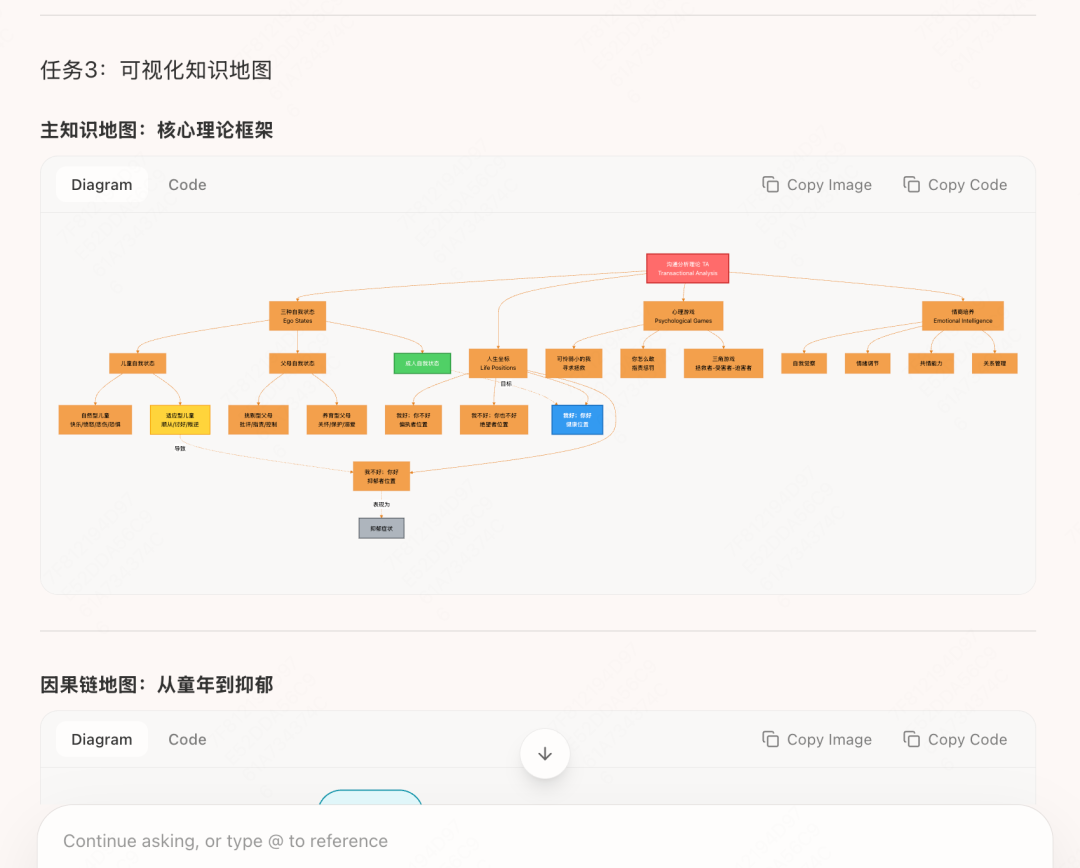
Visualize relationships with mind maps and charts so the hierarchy and logic are clear.
For example, it can analyze a text and generate a visual map.
Here is the causal-chain map.
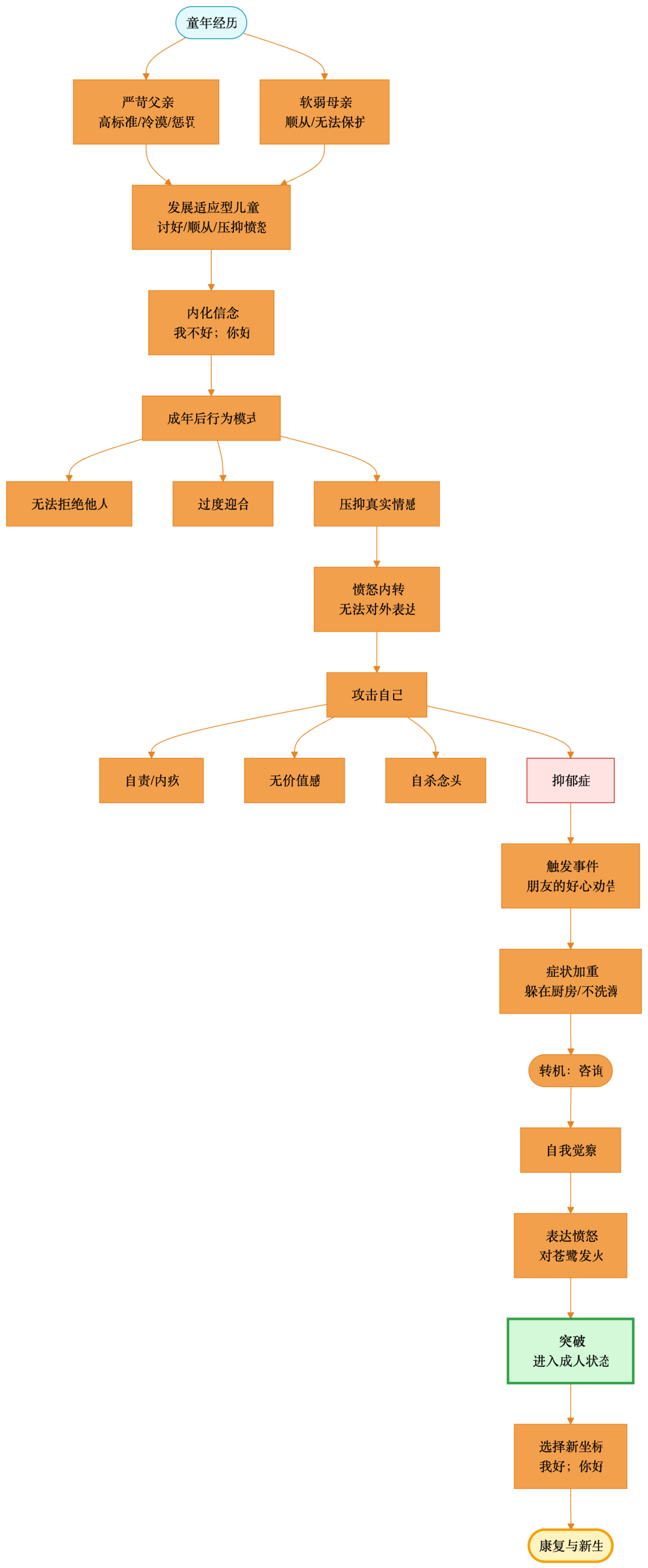
Doesn’t it feel clearer?
Skill 4: Advanced Learning Planner
Fill out the knowledge graph
Once you have a map, you roughly know the new world in front of you. Next you need to know where you have been, what remains, and which areas need more detail.
Advanced Learning Planner addresses the hardest part of learning: not knowing what you do not know.
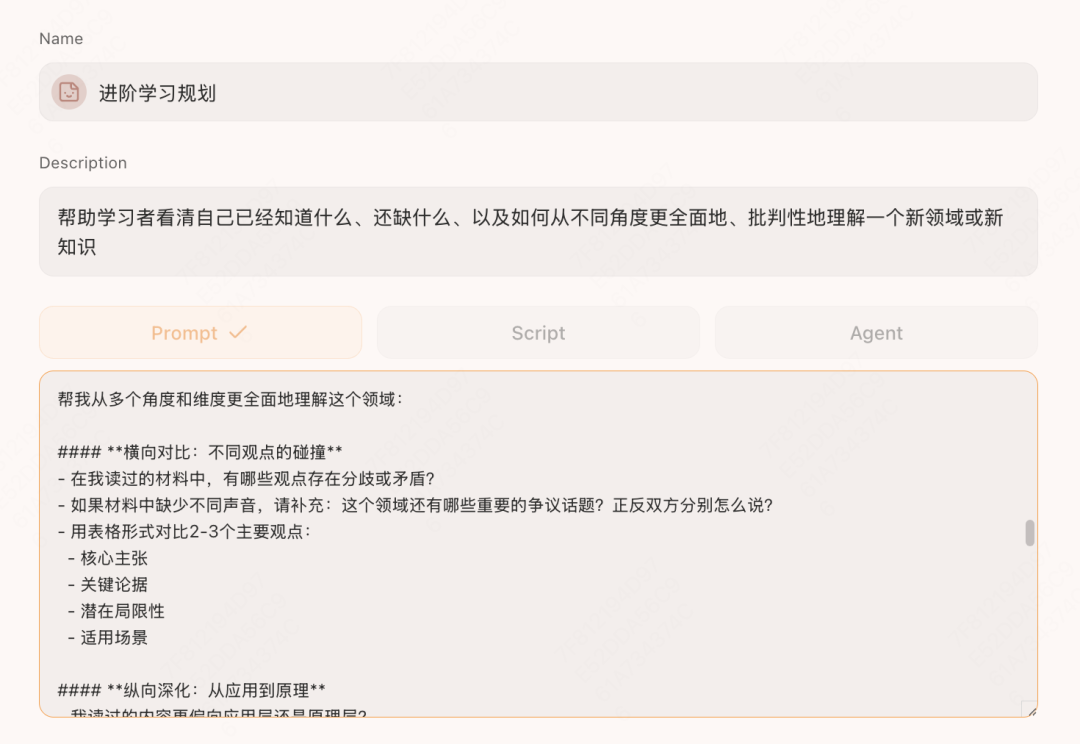
In general, the Skill can analyze related materials you @ and provide several abilities.
Knowledge mastery diagnosis: comprehensively assess your current knowledge like a checkup.
Knowledge blind-spot recognition: identify gaps and blind spots.
Multi-dimensional comparison and expansion: understand the field from multiple angles.
Personalized learning path planning: plan the next direction based on the diagnosis.
These four Skills can be used separately, but we recommend linking them into a complete learning flow.
Start with Everything Explainer to lower the barrier and build initial understanding.
https://web.tabbit-ai.com/share/skill/tJi5v2sEip
Use Deep Reading Assistant to ask questions and deepen thinking.
https://web.tabbit-ai.com/share/skill/7LttsTkNg5
Then use Knowledge Map to structure fragments.
https://web.tabbit-ai.com/share/skill/Q8cXaDFKKM
Finally use Advanced Learning Planner to expand boundaries and fill blind spots.
https://web.tabbit-ai.com/share/skill/Pio5d78J3s
You can also design your own flow and create new Skills according to your learning habits. No extra software or complex operations are needed. Tabbit is like a 24-hour thinking coach.
When browsing, use @ references and AI chat to weave scattered online knowledge into your own cognitive map.
Pick a field you have wanted to learn but have not started, pair it with the latest models, and try these four Skills. Feedback and suggestions are welcome in the comments.
If you have not tried Tabbit yet, visit www.tabbit.ai or tap “Read Original” to go to the official site and download it for free.